Des Walker: The Relentless Defender Who Became an England Great
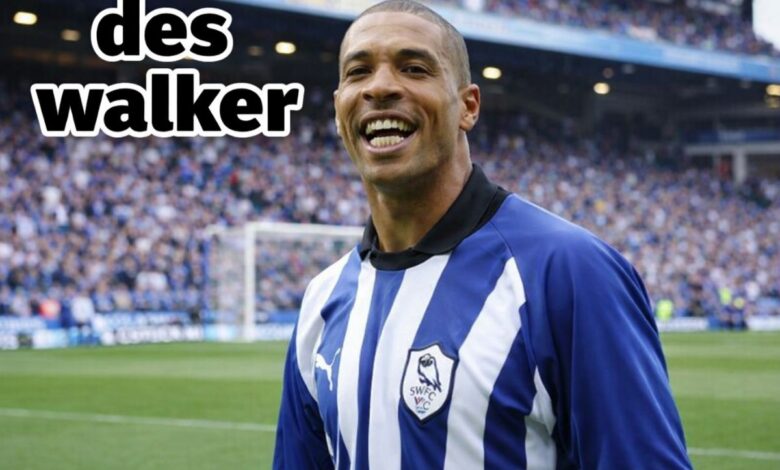
When people talk about elite English defenders from the late 1980s and 1990s, Des Walker deserves a place near the top of the conversation. He was not flashy, he was not a headline-chasing personality, and he was never known for goals or glamorous moments on the ball. Instead, he built his reputation through recovery pace, sharp timing, clean tackling, and a calm refusal to be beaten in one-on-one situations. That combination made him one of the most respected defenders of his generation and a major figure for both club and country.
Who Is Des Walker?
Des Walker, whose full name is Desmond Sinclair Walker, was born on 26 November 1965 in Hackney, London. He played mainly as a centre-back, though England records also list him as having played as a sweeper. Across his career, he represented Nottingham Forest, Sampdoria, and Sheffield Wednesday, while earning 59 caps for England between 1988 and 1993. England’s official statistical record also lists him as Legacy No. 1005.
What makes Walker so memorable is that he embodied defensive excellence in a simple, direct way. He was not known for long passing or ball-playing showmanship. He was known for stopping attacks, winning races, reading danger early, and making life miserable for strikers. Even decades later, that is the quality most fans and historians still attach to his name.
Early Life and Breakthrough at Nottingham Forest
Walker’s path to the top was not completely straightforward. The National Football Museum notes that he was released by Tottenham Hotspur’s academy before being picked up by Nottingham Forest at the age of 16. Within two years, he had made his first-team breakthrough under the legendary Brian Clough, a manager who demanded discipline, concentration, and trustworthiness from defenders.
Learning Under Brian Clough
That environment was ideal for Walker’s development. He was not the kind of player who relied on drama or individual flair. He became great by mastering the fundamentals. Forest gave him the platform to sharpen his natural speed and turn it into a complete defensive weapon. His reading of the game improved, his tackling became cleaner, and he developed the kind of defensive confidence that allowed him to recover even when attackers thought they had escaped.
Des Walker at Nottingham Forest
Nottingham Forest was the club most closely linked with Walker’s identity. Forest’s official historical features credit him with 408 appearances and 1 goal across his spells with the club. That number alone tells you how trusted and consistent he was. He was not a short-term success story. He was a pillar of the side for years.
Forest’s official Player of the Season history shows that Walker won the club’s award in 1986/87, 1989/90, and 1991/92. That is a remarkable achievement for any player, but it is especially impressive for a defender, because defenders often receive less public attention than attackers. Those awards reflect how valuable he was to the team week after week, season after season.
Trophies and Big-Match Value
Walker was not just consistent. He was also a winner. The National Football Museum records that by the age of 26 he had won two League Cups and two Full Members’ Cups, and had been named in the PFA Team of the Year four seasons in a row. That kind of recognition shows he was not only admired by fans, but also respected across the professional game.
His style suited major occasions. In an era when English football was physical, direct, and unforgiving, Walker looked perfectly built for the role of last-man defender. He was fast enough to recover, strong enough to compete, and disciplined enough to avoid careless mistakes for long stretches. That reliability is one reason his name still carries so much respect among Forest supporters.
England Career and Italia 90
Des Walker’s England record is strong and clear. England statistics show he made his debut against Denmark on 14 September 1988 and won his final cap against San Marino on 17 November 1993, finishing with 59 appearances for the national team. Of those caps, 47 came while he was at Nottingham Forest, 11 while at Sampdoria, and 1 while at Sheffield Wednesday.
His international reputation was strengthened most by the 1990 World Cup in Italy. The National Football Museum describes him as an integral part of Bobby Robson’s defensive setup and states that he played every minute of the tournament as England finished fourth, reaching the semi-finals. That run remains one of the defining campaigns in modern England football history, and Walker was central to it.
Why He Stood Out for England
Walker gave England something every top side needs: security. He could defend space, cover teammates, and cope with fast forwards without panic. He was the kind of centre-back who reduced risk before it became a crisis. In a national team that had many famous attacking and creative names, his work was often quieter, but it was no less important. That is one reason his 59-cap total still looks impressive.
Sampdoria and Sheffield Wednesday Years
After establishing himself in England, Walker moved abroad to Sampdoria for the 1992/93 season. Soccerbase records 30 league appearances for him in Italy, while the National Football Museum notes that he was used out of position at times and returned to England after one year. Even though the move was brief, it added another dimension to his career and showed that he was respected beyond the English game.
He then joined Sheffield Wednesday, where he enjoyed another long and important chapter. Soccerbase credits him with 309 league appearances for Wednesday between 1993 and 2002. The Premier League’s official player page also records 264 Premier League appearances, 0 goals, and 2 assists across his top-flight years. Those numbers underline his longevity and his specialist role: he was there to defend first, defend second, and defend third.
Walker later returned to Nottingham Forest, adding another spell to the club where he made his name. Soccerbase’s league record shows his long club career stretched into 2005, and his overall league total stands at 650 appearances with 1 goal. That is a career built not on statistics that grab headlines, but on consistency, fitness, and trust.
Playing Style and Lasting Legacy
The easiest way to understand Des Walker is to think of him as a defender who stripped the role back to its essentials. He was quick, alert, and highly dependable. He rarely needed elaborate recovery because he often read danger early, but when recovery was needed, few defenders of his time were better equipped to handle it. His game was based on timing rather than noise.
He also represents an important footballing model that still matters today. In an age when centre-backs are often judged by passing range and buildup play, Walker reminds us that defending itself is a skill worthy of admiration. He was proof that a defender could become elite through concentration, positioning, pace, and pure competitive instinct. That is why older supporters still speak about him with such admiration and why younger fans studying football history continue to discover how good he really was.
Quick Info About Des Walker
Career Snapshot
Full name: Desmond Sinclair Walker
Date of birth: 26 November 1965
Place of birth: Hackney, London
Main position: Centre-back
England caps: 59
England career: 1988 to 1993
Major clubs: Nottingham Forest, Sampdoria, Sheffield Wednesday
Premier League appearances: 264
Nottingham Forest appearances: 408
Nottingham Forest Player of the Season awards: 1986/87, 1989/90, 1991/92
FAQs About Des Walker
Was Des Walker a good defender?
Yes. Des Walker is widely regarded as one of the best English defenders of his era because of his speed, timing, tackling, and consistency. His honours, repeated team awards, and 59 England caps support that reputation.
How many caps did Des Walker win for England?
He won 59 caps for England and made his international appearances between 1988 and 1993.
Which clubs did Des Walker play for?
He played for Nottingham Forest, Sampdoria, and Sheffield Wednesday, with two separate spells at Nottingham Forest.
Did Des Walker play in the Premier League?
Yes. The Premier League records 264 appearances, along with 0 goals and 2 assists, for Walker in the competition.
What is Des Walker most remembered for?
He is most remembered for being an exceptionally quick, reliable, and hard-to-beat defender for Nottingham Forest and England, especially during England’s run to the 1990 World Cup semi-finals.