Sergeant Major: The Pinnacle of Military Leadership
Introduction
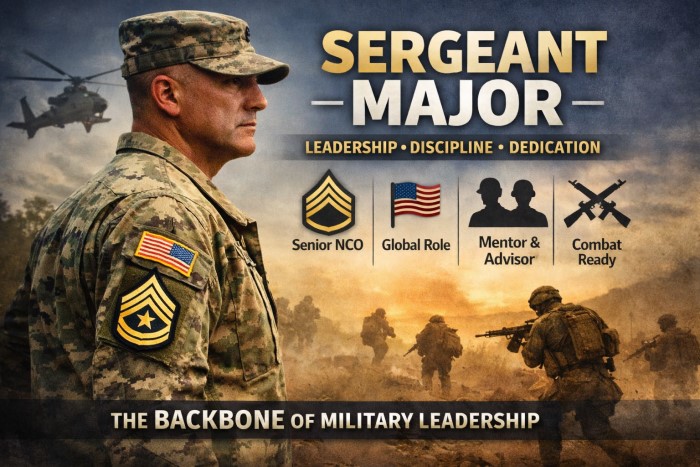
Sergeant major is more than just a military rank; it symbolizes leadership, discipline, and dedication within the armed forces. This title is held by senior non-commissioned officers (NCOs) who have spent years mastering their craft, gaining respect, and ensuring that military operations run smoothly. Recognized globally, the sergeant major plays a critical role in maintaining the morale, training, and operational effectiveness of soldiers.
In this article, we will explore everything about the sergeant major, including its history, roles, responsibilities, types, and frequently asked questions. This detailed guide provides an in-depth understanding for anyone curious about military leadership and hierarchy.
History of Sergeant Major
The origin of the sergeant major dates back to the 16th and 17th centuries in European armies. Originally, sergeants major were appointed to assist officers in organizing troops, maintaining discipline, and handling administrative tasks. Over time, the role evolved into a prestigious non-commissioned officer rank that holds authority in both training and operations.
In modern military organizations, the sergeant major is recognized as the senior enlisted advisor to commanding officers, reflecting centuries of evolution from a purely administrative function to a leadership position of strategic importance.
Roles and Responsibilities of a Sergeant Major
The position of sergeant major carries immense responsibilities that go beyond simply commanding troops. These responsibilities include:
Leadership and Mentorship
A sergeant major serves as a mentor to lower-ranking soldiers, guiding them through training and career development. They lead by example, demonstrating discipline, professionalism, and commitment to military values. Their guidance ensures that soldiers are prepared for the challenges of both peacetime and combat operations.
Advisor to Commanders
One of the primary duties of a sergeant major is to act as a senior advisor to commanding officers. They provide insights on troop morale, operational efficiency, and the overall well-being of enlisted personnel. Their advice is crucial for making informed decisions that affect the unit’s performance.
Maintaining Discipline
Discipline is the backbone of any military organization. Sergeant majors enforce regulations, monitor conduct, and implement standards within their units. By maintaining order and structure, they ensure that soldiers operate efficiently and safely in high-pressure environments.
Operational Oversight
In addition to administrative and advisory roles, sergeant majors oversee training exercises, equipment management, and mission planning. They act as a bridge between enlisted personnel and officers, ensuring smooth communication and coordination within the military hierarchy.
Types of Sergeant Major Ranks
Different countries have variations of the sergeant major rank, each with specific roles and responsibilities. Here’s a look at the most common types:
Command Sergeant Major
This is the highest-ranking non-commissioned officer in many armies. A command sergeant major typically serves as the senior enlisted advisor at the battalion, brigade, or division level. They oversee personnel management, training standards, and disciplinary procedures.
Regimental Sergeant Major
Common in British and Commonwealth armies, the regimental sergeant major is responsible for upholding traditions, discipline, and morale within a regiment. They are highly respected figures and often act as role models for all enlisted soldiers.
Warrant Officer Appointment
In some countries, such as Pakistan and India, the sergeant major is a warrant officer appointment rather than a formal rank. Known as subedar major in South Asian armies, they carry similar responsibilities in advising commanders and leading soldiers.
Qualifications and Skills Required
Becoming a sergeant major requires years of experience, dedication, and exceptional leadership abilities. Key qualifications include:
Military Experience
Typically, a sergeant major has 15 to 25 years of service, having served in multiple roles and gained extensive operational knowledge. Their experience allows them to make sound decisions under pressure.
Leadership and Communication
Effective leadership is crucial. A sergeant major must communicate clearly, resolve conflicts, and motivate personnel. Their ability to lead both on and off the battlefield is essential.
Physical and Mental Fitness
Maintaining peak physical and mental fitness is a requirement. Sergeant majors often participate in training exercises, inspections, and field operations, which demand strength, stamina, and resilience.
Quick Info About Sergeant Major
- Rank Type: Senior Non-Commissioned Officer (NCO)
- Primary Role: Advisor, leader, mentor
- Countries Recognized: USA, UK, Pakistan, India, Canada, Australia, and more
- Key Skills: Leadership, discipline, strategic planning, mentorship
- Career Duration: Usually 15–25 years before reaching this rank
FAQs About Sergeant Major
What is the difference between a sergeant and a sergeant major?
A sergeant is a mid-level NCO primarily responsible for small unit leadership, while a sergeant major is the senior enlisted advisor, focusing on larger unit oversight, discipline, and strategic guidance.
Can women become sergeant majors?
Yes, many modern armies allow women to attain the rank of sergeant major, provided they meet the required experience, leadership, and physical standards.
How is a sergeant major appointed?
Typically, sergeant majors are promoted from the ranks of experienced NCOs based on merit, leadership skills, and performance evaluations. Appointment often involves both training and selection by senior officers.
What is the role of a sergeant major in combat?
In combat, a sergeant major ensures that soldiers are disciplined, follow orders, and remain effective under stressful conditions. They are key advisors to commanding officers and coordinate logistics and personnel management.
Is sergeant major the highest enlisted rank?
In most armies, yes. It is usually the highest non-commissioned rank, often equivalent to warrant officer appointments in some military systems.
Conclusion
The sergeant major is the embodiment of experience, leadership, and commitment in the military. Serving as a mentor, advisor, and disciplinarian, they are essential for maintaining the effectiveness and professionalism of armed forces worldwide. Understanding the role of a sergeant major offers insight into military hierarchy and the dedication required to lead soldiers at the highest level of enlisted service.
This rank is not just a title; it is a lifelong commitment to service, discipline, and the betterment of those who serve under it. For anyone interested in military leadership, the sergeant major represents the pinnacle of dedication and excellence.