Economic Improvement Council: Driving Sustainable Growth, Prosperity, and Policy Excellence
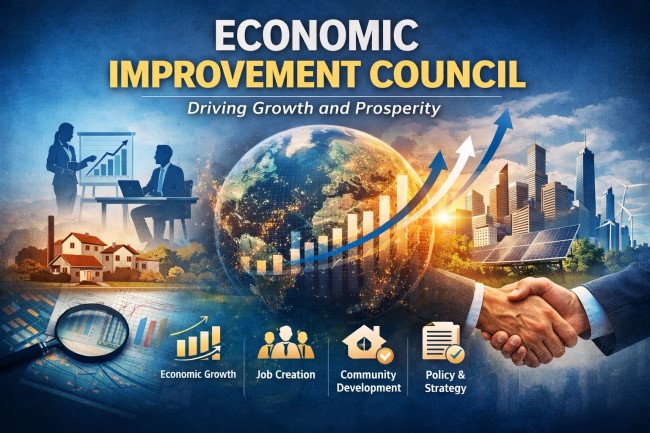
An economic improvement council is a broad and influential concept used to describe councils, committees, or advisory bodies dedicated to enhancing economic performance and social well-being. These councils operate across local, national, and international levels, working with governments, businesses, researchers, and communities to promote sustainable growth.
In an increasingly complex global economy, the role of an economic improvement council has become more important than ever. Such councils help bridge the gap between policy and practice by identifying economic challenges, designing practical solutions, and ensuring that growth benefits society as a whole. This article provides a detailed, structured, and practical explanation of what an economic improvement council is, how it functions, and why it matters.
What Is an Economic Improvement Council?
An economic improvement council is typically a strategic body that focuses on improving economic conditions through planning, coordination, research, and policy guidance. While structures differ across regions, the core purpose remains the same: to support economic resilience, job creation, and inclusive development.
Core Objectives
-
Strengthening local and national economies
-
Encouraging business development and innovation
-
Supporting employment and skills growth
-
Advising policymakers using economic data and research
-
Promoting long-term, sustainable economic strategies
Key Functions of an Economic Improvement Council
Strategic Economic Planning
One of the primary responsibilities of an economic improvement council is to develop and guide economic strategies. These strategies often focus on growth sectors, infrastructure needs, workforce development, and investment priorities.
Policy Advisory Role
Economic improvement councils provide expert advice to decision-makers. This advisory function ensures that economic policies are informed by data, evidence, and real-world economic conditions rather than short-term political pressures.
Economic Monitoring and Analysis
Councils regularly assess economic indicators such as employment levels, productivity, business growth, and investment trends. This analysis allows governments and institutions to respond proactively to emerging challenges.
Types of Economic Improvement Councils
Local-Level Economic Improvement Councils
Local councils often focus on community development and regional growth. Their activities typically include:
-
Supporting small and medium enterprises
-
Revitalizing local industries and town centers
-
Encouraging entrepreneurship and innovation
-
Improving employment opportunities within the region
National-Level Economic Councils
At the national level, economic improvement councils play a broader role by shaping economic policy frameworks. They often contribute to:
-
National development plans
-
Industrial and trade strategies
-
Economic stability and growth initiatives
-
Long-term competitiveness planning
Research-Based Economic Councils
Some economic improvement councils operate primarily as research and advisory bodies. These councils focus on:
-
Economic research and forecasting
-
Impact evaluation of economic programs
-
Policy recommendations based on evidence
-
Long-term economic modeling and scenario planning
Why Economic Improvement Councils Matter
Supporting Sustainable Growth
Economic improvement councils emphasize sustainability by balancing economic expansion with social and environmental responsibility. This approach ensures that growth does not come at the expense of future generations.
Encouraging Inclusive Development
A strong economic improvement council promotes policies that reduce inequality and support disadvantaged communities. Inclusive growth strengthens social stability and economic resilience.
Enhancing Policy Quality
By providing independent analysis and expert insight, economic improvement councils improve the quality of economic decision-making. Better policies lead to stronger outcomes.
Challenges Faced by Economic Improvement Councils
Balancing Competing Interests
Economic improvement councils often navigate competing priorities between businesses, governments, and communities. Managing these interests requires transparency and strong governance.
Adapting to Economic Change
Rapid technological change, globalization, and economic shocks demand flexibility. Councils must constantly update strategies to remain relevant and effective.
Implementation Limitations
While councils provide guidance, implementation depends on political will, funding, and institutional capacity. This gap can sometimes limit their impact.
Future of Economic Improvement Councils
The future of the economic improvement council lies in data-driven decision-making, digital transformation, and stronger collaboration between public and private sectors. As economies face challenges such as climate change, automation, and demographic shifts, these councils will play a vital role in shaping adaptive and resilient economic systems.
Quick Info About Economic Improvement Council
| Aspect | Details |
|---|---|
| Primary Purpose | Promote economic growth and stability |
| Key Role | Advisory, planning, and analysis |
| Levels of Operation | Local, national, international |
| Focus Areas | Jobs, investment, policy, sustainability |
| Stakeholders | Government, business, community, researchers |
FAQs About Economic Improvement Council
What does an economic improvement council do?
An economic improvement council provides strategic guidance, research, and policy advice to improve economic conditions and support sustainable growth.
Is an economic improvement council part of the government?
Some councils operate within government structures, while others function as independent or semi-independent advisory bodies.
How does an economic improvement council help businesses?
It supports businesses through policy recommendations, economic planning, investment strategies, and workforce development initiatives.
Why is an economic improvement council important?
It improves economic decision-making, promotes inclusive growth, and helps societies adapt to economic change.
Can economic improvement councils influence policy?
Yes, their research and recommendations often shape economic policies and long-term development strategies.
Conclusion
An economic improvement council is a vital institution for guiding economic progress in an increasingly complex world. By combining research, policy insight, and strategic planning, these councils help economies grow stronger, more inclusive, and more resilient. Their role in shaping sustainable development ensures that economic progress benefits both present and future generations.