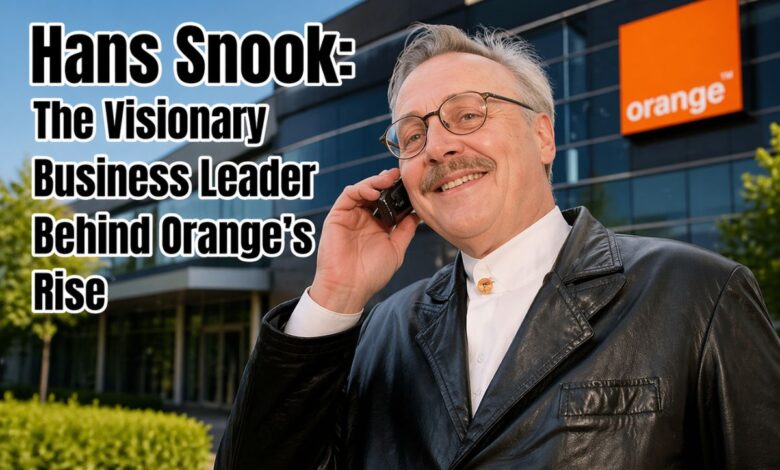
Hans Snook: The Visionary Business Leader Behind Orange’s Rise
Introduction
Hans Snook is one of the most interesting figures in the history of British telecommunications. Best known as the co-founder and early chief executive of Orange, he helped turn a newcomer in mobile phones into one of the most recognized brands in the United Kingdom. Orange launched on 28 April 1994 and quickly built a reputation for simplicity, bold branding, and customer-focused innovation. Snook’s leadership played a major part in that rise.
At a time when the mobile industry was still developing, Hans Snook stood out because he did not think like a typical telecom executive. He brought energy, personality, and a strong sense of brand identity to a sector that often felt technical and corporate. That unusual approach helped Orange feel fresh, modern, and accessible to ordinary consumers.
Today, people still search for terms like hans snook net worth, hans snook wife, and hans snook wife helen because his story combines business success, media attention, and a distinctive personal image. While some parts of his personal life are not widely documented in official public records, his impact on British business and telecom history is clear.
Hans Snook Early Life and Background
A multinational upbringing
Hans Roger Snook was born in 1948 in Germany to a German mother and a British father. His family later moved to Vancouver, Canada, where he grew up and attended the University of British Columbia. This international background likely contributed to the broad perspective he later brought to business.
From hotel management to telecom
Before becoming famous in the telecom sector, Snook worked in hotel management. That early career path may seem far removed from mobile communications, but it helped build the people skills and operational discipline that later served him well. After that, a move into wireless communications in Hong Kong opened the door to the industry that would define his name.
Hans Snook and the Creation of Orange
The move that changed his career
Snook became involved with Hutchison Whampoa and was later sent to the UK, where he helped close Hutchison’s Rabbit CT2 service and redirect attention toward building a stronger mobile network. That shift led to the development of Orange, which would become one of the most memorable brands in British telecom history.
Launching Orange in 1994
Orange launched on 28 April 1994. The company entered a competitive market, but it distinguished itself through smart branding, clear communication, and a different tone from its rivals. Under Hans Snook’s leadership, Orange grew quickly and earned a strong reputation within just a few years. Contemporary reporting and company history both credit him as a central figure in Orange’s early rise.
Why Orange stood out
Orange was more than just another phone company. It presented itself as modern, easy to understand, and customer-friendly. This mattered because telecom pricing and services could feel confusing to consumers in the 1990s. The marketing of Orange became widely admired and influenced how other companies promoted complicated technical services.
Hans Snook Leadership Style
A bold and unconventional executive
Hans Snook was often described as charismatic, unconventional, and highly individual. He did not fit the stereotypical image of a corporate executive, and that difference actually helped Orange stand apart. His personality became closely linked with the brand’s public image.
Brand thinking before it became common
One of the strongest parts of Snook’s legacy is how seriously he treated brand identity. Orange did not succeed only because of network expansion or business strategy. It also succeeded because it felt emotionally distinct. The company’s modern image, clean message, and memorable public presence helped make it a household name.
Vision for the future
Orange’s official brand history notes that in February 2000, Hans Snook presented the “Orange World” vision at the GSM World Congress in Cannes. That presentation imagined a mobile, connected, highly social future that resembles many of today’s digital habits. This shows that Snook was not only building a telecom company; he was also thinking ahead about how mobile technology would shape everyday life.
Business Success and Exit from Orange
The company’s changing ownership
Orange’s success attracted major corporate interest. In October 1999, Mannesmann bought Orange. A chain of later events resulted in France Télécom taking ownership of Orange, and Hans Snook stepped away from the company soon after, eventually leaving his advisory role in 2001.
Life after Orange
After Orange, Snook remained active in business. He later served as chairman of Carphone Warehouse from 2002 to 2005. He also became involved in other ventures, including projects linked to alternative and preventative health.
Hans Snook Net Worth
People often search for hans snook net worth, but there does not appear to be a reliable, current, publicly verified net worth figure from an authoritative source. That means it would be misleading to present a precise number as fact.
What can be said with more confidence is that press coverage around his departure from Orange described him as leaving the company substantially wealthier. One report from 2003 said he left Orange an estimated £40 million richer. That figure should be understood as a historical media estimate, not a confirmed present-day net worth.
Hans Snook Wife and Personal Life
Another common search topic is hans snook wife and hans snook wife helen. Public sources indicate that Hans Snook was divorced from his first wife, Etta Lai Yee Lau, and was later reported to be married to Helen Seward. Some more recent public references also use the name Helen Snook. Because public reporting on his private life is limited, it is best to state this carefully rather than speculate beyond the available sources.
His personal image often drew media attention because he was seen as an unusual business leader with interests that extended beyond telecom into health, lifestyle, and alternative therapies. That distinctive public persona made him memorable long after his formal Orange years ended.
Legacy of Hans Snook
Why he still matters
Hans Snook remains an important business figure because he helped prove that a telecom company could win not just through infrastructure, but also through identity, simplicity, and public trust. His work at Orange changed the way many people thought about mobile brands.
A lasting influence
Even today, Orange is remembered as one of the defining telecom brands of its era, and Hans Snook’s name is closely tied to that success. His story is a reminder that innovation in business is not only about technology. It is also about vision, communication, timing, and courage.
Quick Info About Hans Snook
Basic facts
Profile summary
- Full name: Hans Roger Snook
- Birth year: 1948
- Nationality: British
- Known for: Co-founding Orange and serving as its early chief executive
- Industry: Telecommunications and business leadership
- Later roles: Chairman of Carphone Warehouse and involvement in health-related ventures
FAQs About Hans Snook
Who is Hans Snook?
Hans Snook is a British businessman best known as the co-founder and early chief executive of Orange, one of the most famous mobile telecom brands in the UK.
What is Hans Snook famous for?
He is famous for helping launch and grow Orange into a leading mobile phone company and for giving the brand a strong and memorable identity.
What is Hans Snook net worth?
There is no widely verified current public net worth figure. Older media coverage said he left Orange an estimated £40 million richer, but that should not be treated as a confirmed present-day number.
Who is Hans Snook wife?
Public reporting says he was divorced from his first wife and later married Helen Seward, with some later public references using the name Helen Snook.
Why is Hans Snook still discussed today?
He is still discussed because Orange became one of the most influential telecom brands in Britain, and his leadership style made him a standout figure in business history.