Sarah Ward: Transforming Executive Functioning Through Practical, Brain-Based Strategies
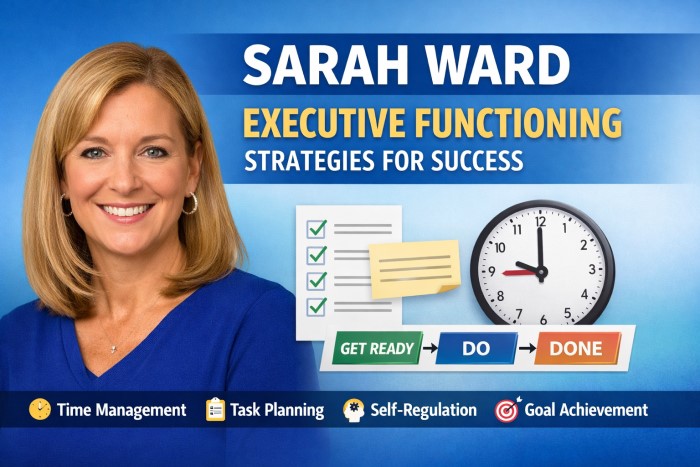
Sarah Ward is widely recognized for her influential work in the area of executive functioning. Over the years, her practical, human-centered approach has helped educators, clinicians, parents, and learners better understand how the brain plans, organizes, initiates, and completes tasks. Rather than relying on abstract theory alone, Sarah Ward focuses on real-world strategies that improve independence, self-regulation, and follow-through.
In today’s fast-paced academic and professional environments, executive functioning challenges are more visible than ever. This is where Sarah Ward’s work stands out. Her methods break complex cognitive processes into clear, teachable steps that can be applied in classrooms, therapy rooms, homes, and workplaces.
Who Is Sarah Ward?
Sarah Ward is a highly experienced speech-language pathologist and executive functioning specialist. She has spent decades working directly with individuals who struggle with planning, organization, time management, and task completion. Her work spans children, adolescents, and adults, making her approach flexible and widely applicable.
What distinguishes Sarah Ward from many others in this field is her emphasis on teaching the thinking process, not just managing behavior. She believes executive functioning skills can be developed and strengthened through explicit instruction and consistent practice.
Understanding Executive Functioning
What Is Executive Functioning?
Executive functioning refers to a set of mental skills that help individuals:
-
Plan and organize tasks
-
Start work independently
-
Manage time and materials
-
Monitor progress
-
Complete goals efficiently
When executive functioning is weak, people may know what to do but struggle with how to get it done.
Why Executive Functioning Matters
Executive functioning impacts nearly every aspect of daily life. Academic performance, workplace success, emotional regulation, and independence all rely heavily on these skills. Sarah Ward executive functioning strategies focus on building these abilities in a way that feels achievable and sustainable.
Sarah Ward Executive Functioning Approach
A Skill-Building Philosophy
Sarah Ward executive functioning methods are grounded in the belief that executive skills are teachable. Instead of assuming individuals will “figure it out with maturity,” her approach provides direct instruction in:
-
Planning steps before starting
-
Visualizing time
-
Breaking tasks into manageable actions
-
Reflecting on performance after completion
This structured teaching helps learners internalize executive processes over time.
From Adult-Directed to Self-Directed
A core principle in Sarah Ward’s work is the gradual shift from adult support to independent control. Initially, adults model planning and organization. Over time, responsibility is transferred to the learner, strengthening self-regulation and confidence.
Key Strategies Associated With Sarah Ward
Time Awareness
One of the most well-known aspects of Sarah Ward executive functioning instruction is improving time awareness. Many individuals with executive challenges struggle to estimate how long tasks take. Sarah Ward emphasizes making time visible and concrete so learners can plan realistically.
Task Initiation
Knowing what to do does not always lead to starting. Sarah Ward addresses task initiation by teaching learners how to:
-
Identify the first action step
-
Reduce overwhelm
-
Use simple planning language
Planning and Follow-Through
Planning is not just about writing lists. Sarah Ward teaches learners how to think ahead, anticipate obstacles, and stay flexible when plans change.
Impact in Education
Classroom Applications
Teachers often find Sarah Ward executive functioning strategies especially useful because they integrate easily into classroom routines. Her methods support:
-
Homework completion
-
Long-term projects
-
Independent work time
-
Transitions between activities
Supporting Diverse Learners
Students with learning differences, attention challenges, or processing delays often benefit from explicit executive function instruction. Sarah Ward’s strategies provide structure without limiting creativity or autonomy.
Benefits for Adults
Executive functioning challenges do not disappear after childhood. Adults may struggle with deadlines, organization, and productivity. Sarah Ward executive functioning principles apply equally well to adult learners, professionals, and college students who want to improve efficiency and reduce stress.
Why Sarah Ward’s Work Stands Out
Practical and Realistic
Sarah Ward avoids overly technical language and focuses on strategies that work in real life. This makes her approach accessible to families and professionals alike.
Consistent and Research-Informed
While her methods are practical, they are also grounded in cognitive science and years of clinical observation.
Focus on Independence
The ultimate goal of Sarah Ward executive functioning instruction is independence. Strategies are designed to fade support over time, empowering individuals to manage tasks on their own.
Related Keywords Focus: Sarah Ward Executive Functioning
The phrase sarah ward executive functioning is often searched by educators and parents seeking clear, actionable guidance. This reflects the trust placed in her methods and the growing awareness that executive functioning skills must be explicitly taught, not assumed.
Sarah Ward executive functioning strategies continue to influence professional development, classroom instruction, and therapeutic practice worldwide.
Quick Info About Sarah Ward
-
Field: Executive functioning and cognitive skill development
-
Primary Focus: Planning, organization, time management, and self-regulation
-
Audience: Children, teens, adults, educators, clinicians, and families
-
Approach: Practical, structured, and skill-based
FAQs About Sarah Ward and Executive Functioning
What is Sarah Ward best known for?
Sarah Ward is best known for her practical approach to teaching executive functioning skills, especially planning, time awareness, and task completion.
Who can benefit from Sarah Ward executive functioning strategies?
Children, students, adults, educators, and professionals can all benefit from her methods.
Are executive functioning skills teachable?
Yes. Sarah Ward’s work strongly supports the idea that executive functioning skills can be explicitly taught and improved with practice.
Is Sarah Ward’s approach suitable for classrooms?
Yes. Many educators use Sarah Ward executive functioning strategies to support independence and organization in students.
Why is executive functioning important?
Executive functioning skills affect learning, productivity, emotional regulation, and daily independence.
Conclusion
Sarah Ward has made a lasting impact on how executive functioning is understood and taught. By focusing on practical strategies, clear thinking processes, and gradual independence, she has helped countless individuals gain control over planning, time, and task completion. The continued interest in sarah ward executive functioning reflects the relevance and effectiveness of her work in today’s complex world.