Treating Bruxism: Night Guards and Mouth Guards for Teeth Grinding
Bruxism (teeth grinding) affects millions worldwide, causing sore jaws, headaches, and sensitive teeth. Yet, it is usually ignored until bigger damage shows up. For example, chipped teeth, misalignment, or TMJ issues.
And once that happens, people always ask if there’s a cure. Well, the reality is, treating bruxism is quite challenging. There are a few methods, though. They can be used depending upon the underlying cause. But a 100% cure might still not be possible. That being said, bruxism can be effectively managed. And while you can’t uproot it, you can protect yourself from the damage it causes.
To do so, you need the right night guard or mouth guard for teeth grinding. Let’s explore how these dental appliances help with bruxism.
Understanding Bruxism
As we mentioned earlier, bruxism is when you grind your teeth without realising it. Usually, it happens when you’re asleep. However, some people do clench during the day unknowingly. It is often during times of stress or deep focus.
Now, the most commonly asked question is, what causes this unknowing teeth grinding? Stress is one of the biggest triggers, but misaligned teeth, sleep disorders, or even certain medications can also play a role. And, what are its symptoms?
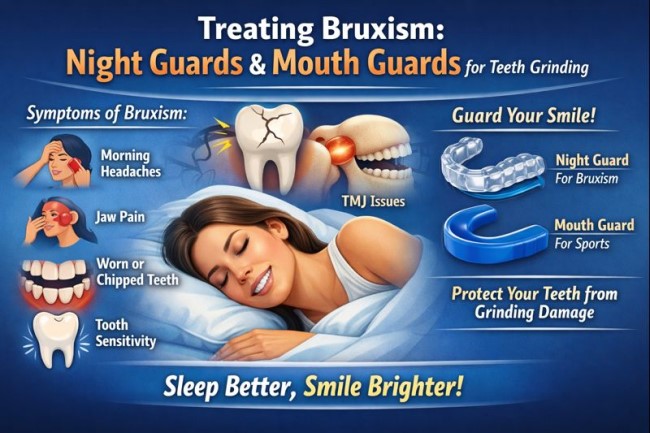
- Morning headaches
- Jaw stiffness or soreness
- Worn-down or chipped teeth
- Tooth sensitivity
That said, if left untreated, bruxism can lead to more serious issues like cracked teeth, gum recession, or temporomandibular joint (TMJ) disorders. That’s why finding a solution sooner rather than later is key.
However, treating bruxism from the root can be difficult. It may take quite a while and requires dedication. So, until you get rid of it totally, you can still cut down the damage it causes. For that you might require a night guard or mouth guard for teeth grinding.
But first, what’s the difference between them?
Night Guards vs. Mouth Guards: What’s the Difference?
When people start looking for a solution, the terms night guard and mouth guard often get tossed around. While they sound similar, they serve slightly different purposes.
| Night Guards | Mouth Guards |
| Designed specifically for bruxism.
They act as a cushion between your upper and lower teeth while you sleep, preventing grinding damage. They’re typically slimmer than sports guards, so they’re comfortable enough to wear for hours at night. |
A broader category.
They are thick plastic guards that athletes wear to protect against injuries during sports. While some mouth guards can also be used for bruxism, they’re not always designed with nighttime comfort in mind. |
In short:
- Night Guards: Best for grinding and clenching during sleep.
- Mouth Guards: Best for sports or impact protection. Can be used for teeth grinding in certain cases, but not as effective as night guards.
While both provide a barrier between your teeth, if your goal is to stop grinding damage, a night guard is usually the smarter choice.
Types of Night Guards for Bruxism
Not all night guards are created equal. You’ve got options depending on your needs and budget:
Custom Dental Night Guards
- Made by your dentist using an impression of your teeth.
- Offer the best fit, comfort, and durability.
- Downside? They can be pricey, sometimes costing several hundred dollars.
Boil-and-Bite Guards
- Available at most drugstores.
- You soften them in hot water, then bite down to mold them to your teeth.
- More affordable and semi-custom, though not as precise as dentist-made guards.
Stock Guards
- Pre-formed and ready to wear.
- Cheapest option but usually bulky and uncomfortable.
- Can make sleeping harder, which defeats the purpose.
If you’re just starting out, boil-and-bite guards can be a good introduction. But for long-term protection and comfort, custom guards are worth the investment.
How to Choose the Right Guard
With so many options out there, how do you pick the right one? Start by considering these factors:
- Severity of your grinding: Heavy grinders may need a thicker, sturdier guard.
- Comfort: If it doesn’t feel good in your mouth, you won’t wear it consistently.
- Cost: Balance what you can afford with the level of protection you need.
- Durability: Some guards last a year or more, while cheaper ones may need replacing every few months.
If you’re unsure, talking to your dentist can help point you in the right direction. They can also check your teeth for grinding-related damage and recommend the best solution for your case. And remember, night guards don’t last forever. Over time, they wear down too, so replacing them regularly is part of the process.
What to Do If Bruxism Has Caused Damage?
If the damage has been done, there’s nothing to worry about. There are ways to solve it. If you have chipped teeth, veneers, dental bonds, and crowns can do the job for you. If you are facing misalignment issues, go for teeth straightening.
Similarly, you can find solutions for almost all issues, and some issues will be automatically resolved once you start using a night guard.
Wrap Up
Bruxism is a common problem. And it shouldn’t take a toll on your health or your smile. Unlike what many believe, bruxism can be solved. If nothing else, you can at least reduce the damage it can cause. For that, night guards are simple, effective solutions that provide lasting protection.
You can also use mouth guards for teeth grinding, but they aren’t designed for the purpose and aren’t comfortable. That said, something is still better than nothing.
Finally, if you’ve noticed signs of bruxism, now’s the time to act. Protecting your teeth today means avoiding bigger dental problems tomorrow, and sleeping more comfortably in the process. So, whether you start with a boil-and-bite guard or invest in a custom one, the important thing is to give your teeth the protection they deserve.