Liquor Bottle Colors: Everything You Need to Know
Liquor bottle colors are more than a design choice. They shape how a brand is seen, how a product is protected, and how customers react on the shelf. In the spirits industry, the bottle often speaks before the label. Color creates emotion, builds trust, and supports brand identity.
When buyers walk through a liquor store, they do not read every label. They scan. Color is one of the first elements they notice. This is why liquor bottle colors play a direct role in purchase decisions.
Why Liquor Bottle Colors Matter
Liquor bottle colors help brands communicate quality and purpose. A clear bottle sends a different message than a dark one. Each color carries meaning and function.
Color also affects product safety. Some spirits need protection from light. Others benefit from visual clarity. Choosing the wrong bottle color can harm both branding and liquid quality.
For new brands, bottle color is often part of the first impression. For established brands, it reinforces recognition. In both cases, consistency matters.
Popular Liquor Bottle Colors and Their Uses
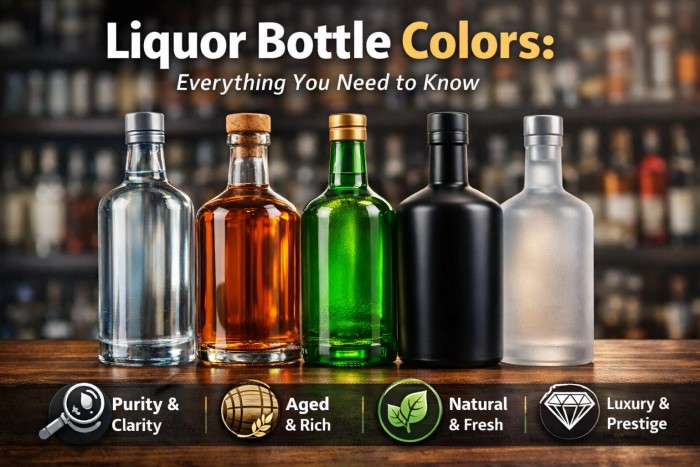
Clear glass is widely used for vodka, gin, and unaged spirits. It creates a clean and honest look. Customers can see the liquid inside, which builds confidence. Clear bottles work well for brands that want to highlight purity and transparency.
Amber bottles are common for whiskey, bourbon, and rum. This color offers strong protection from UV light. It also signals tradition and depth. Many consumers associate amber glass with aging and rich flavor.
Green bottles are often seen in herbal liqueurs and regional spirits. Green suggests balance, nature, and freshness. It also provides moderate light protection. This makes it both practical and attractive.
Black and dark bottles are popular in premium categories. They create a sense of luxury and mystery. These liquor bottle colors are often used for limited releases or high-end products. Dark glass helps brands stand out while feeling exclusive.
Frosted and tinted bottles add a modern touch. They soften the appearance and create texture. These options work well for contemporary brands that want a clean but stylish look.
How Bottle Color Influences Perceived Value
Consumers often link darker bottles with higher value. A black or deep amber bottle feels heavier and more serious. This can justify a higher price point.
Clear bottles feel lighter and more casual. They appeal to younger audiences and social settings. Neither option is better. The key is alignment with the brand story.
Liquor bottle colors also support emotional branding. A heritage brand may rely on warm tones. A craft brand may choose soft or unique shades. Color becomes part of how the product is remembered.
The Role of Custom Manufacturing
Standard bottles limit creativity. Custom manufacturing allows brands to control color, thickness, and finish. Working with an experienced Custom Liquor Bottle Manufacturer – Ruisen Glass helps brands create bottles that match their vision.
Custom glass solutions allow precise color control. This ensures consistency across batches. It also allows brands to test new designs without sacrificing quality.
Manufacturers can also advise on technical needs. This includes UV protection, durability, and coating options. These details matter in long-term brand growth.
Choosing the Right Liquor Bottle Colors
The best liquor bottle colors match the spirit, the audience, and the brand message. There is no universal rule. Vodka often benefits from clarity. Whiskey often benefits from warmth. Premium releases often benefit from depth.
Brands should consider shelf environment, lighting, and label contrast. A good bottle color should enhance the label, not hide it.
Testing different options before final production is a smart step. Color looks different under store lighting than in a studio.
Final Perspective
Liquor bottle colors influence perception, protection, and branding. They help products stand out and connect with buyers. A thoughtful color choice strengthens brand identity and supports long-term success. When paired with quality custom manufacturing, the right bottle color becomes a powerful marketing tool.