Alexander Lucie Smith: A Catholic Intellectual Bridging Theology, Culture, and Crime
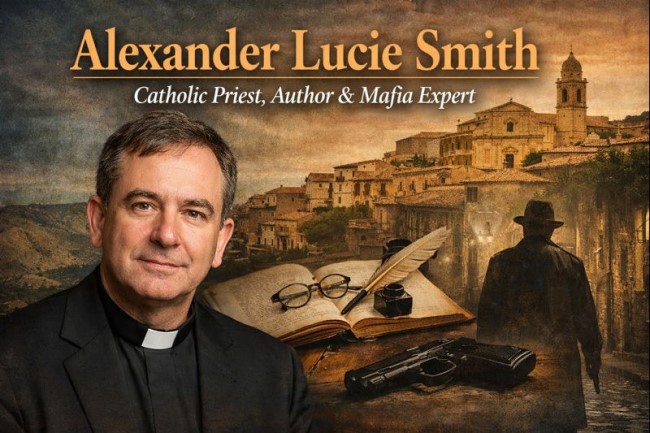
Alexander Lucie Smith is a distinctive voice in contemporary religious and cultural discourse. Known as a Roman Catholic priest, Doctor of Moral Theology, novelist, and journalist, he occupies a rare space where theology, literature, and social analysis intersect. His work is marked by intellectual depth, moral seriousness, and an unusual but compelling focus on the history and sociology of the Sicilian Mafia. Through both academic insight and creative storytelling, he explores enduring questions of sin, power, redemption, and human responsibility.
Early Life and Intellectual Formation
Alexander Lucie Smith’s intellectual journey reflects a deep engagement with faith and culture from an early stage. Drawn to theology and the humanities, he pursued advanced studies that combined philosophical reasoning with moral inquiry.
Academic Pathway
He later completed a Doctorate in Moral Theology, a discipline concerned with ethical reasoning, conscience, virtue, and social morality. This academic background forms the foundation of his public commentary and literary work, allowing him to address complex moral issues with authority and nuance.
Influence of Classical and European Thought
His thinking is shaped by classical Catholic philosophy, European history, and literature. These influences are evident in both his essays and novels, where moral dilemmas are never simplified but examined within their cultural and historical contexts.
Religious Vocation and Priesthood
At the core of Alexander Lucie Smith’s public identity is his vocation as a Roman Catholic priest. His priesthood is not limited to pastoral duties but extends into teaching, writing, and public engagement.
Moral Theology in Practice
As a moral theologian, he applies ethical principles to real-world issues, addressing questions of justice, authority, family life, and cultural change. His work reflects a belief that theology should engage actively with society rather than remain confined to academic circles.
Public Ministry
His priestly role informs his tone and purpose: reflective rather than sensational, critical yet grounded in compassion. This balance has made his voice influential among readers seeking thoughtful religious perspectives on modern life.
Journalism and Cultural Commentary
Alexander Lucie Smith is also widely recognised for his work as a journalist and cultural commentator. His essays often examine the intersection of religion, politics, and culture in contemporary society.
Themes in His Commentary
Common themes in his non-fiction writing include:
-
Moral decline and cultural confusion in modern societies
-
The role of religion in public life
-
The tension between tradition and modernity
-
Ethical challenges posed by political ideologies
His writing style is direct, articulate, and intellectually challenging, appealing to readers who value depth over soundbites.
A Distinctive Voice
Unlike purely academic theologians, he writes for a broader audience, translating complex ideas into accessible but never simplistic prose. This ability has helped him establish a strong reputation as a public intellectual.
Novelist with a Unique Focus
One of the most distinctive aspects of Alexander Lucie Smith’s career is his work as a novelist, particularly his fiction centred on Sicily and the Mafia.
Why Sicily and the Mafia?
His interest in the Sicilian Mafia is not rooted in crime sensationalism. Instead, he approaches it as a social, historical, and moral phenomenon. Sicily provides a rich backdrop where faith, violence, loyalty, and power collide.
Moral and Sociological Exploration
In his novels, the Mafia becomes a lens through which he explores:
-
The moral psychology of criminal organisations
-
The role of honour, family, and silence
-
The coexistence of deep Catholic tradition with organised crime
-
Questions of guilt, repentance, and redemption
This approach distinguishes his fiction from conventional crime novels, placing ethical inquiry at the centre of the narrative.
Theology Through Storytelling
Alexander Lucie Smith’s fiction serves a deeper purpose than entertainment. Storytelling becomes a vehicle for theology and moral reflection.
Characters as Moral Agents
His characters are rarely heroes or villains in simple terms. Instead, they are morally complex individuals shaped by culture, history, and personal weakness. Through them, readers confront uncomfortable questions about complicity, choice, and responsibility.
Faith and Sin
A recurring tension in his work is the contrast between religious belief and moral failure. Churches, rituals, and symbols appear alongside corruption and violence, highlighting the paradoxes of human nature.
Writing Style and Intellectual Approach
Across all genres, Alexander Lucie Smith demonstrates a consistent intellectual approach.
Key Characteristics
-
Analytical depth rooted in theology and philosophy
-
Literary craftsmanship influenced by European fiction
-
Moral seriousness without moralising
-
Cultural awareness grounded in history
This combination allows him to engage readers who are interested in religion, literature, sociology, and ethics.
Public Perception and Influence
Alexander Lucie Smith is widely regarded as a multifaceted Catholic intellectual rather than a single-issue commentator.
Appeal Across Audiences
His work resonates with:
-
Readers interested in religious thought
-
Students of ethics and moral philosophy
-
Literary audiences drawn to intellectually rich fiction
-
Cultural observers seeking deeper analysis of society
Contribution to Contemporary Thought
By engaging with controversial and complex topics, he contributes to ongoing debates about morality, crime, faith, and culture in the modern world.
Legacy and Ongoing Relevance
Alexander Lucie Smith’s significance lies in his refusal to separate faith from culture or morality from storytelling. His work suggests that theology remains relevant when it confronts real human experiences, including violence, power, and injustice.
As societies continue to wrestle with ethical uncertainty and cultural fragmentation, his blend of religious scholarship, journalism, and fiction ensures that his voice remains both relevant and challenging.
Quick Info: Alexander Lucie Smith
| Attribute | Details |
|---|---|
| Full Name | Alexander Lucie Smith |
| Profession | Roman Catholic priest, moral theologian, novelist, journalist |
| Academic Qualification | Doctorate in Moral Theology |
| Known For | Cultural commentary and novels on Sicily and the Mafia |
| Core Themes | Morality, faith, crime, culture, redemption |
| Nationality | British |
| Genres | Theology, journalism, literary fiction |
FAQs About Alexander Lucie Smith
Who is Alexander Lucie Smith?
Alexander Lucie Smith is a Roman Catholic priest, Doctor of Moral Theology, novelist, and journalist known for blending theology, culture, and literature.
What makes his work unique?
His work uniquely combines religious scholarship with literary fiction, especially focused on the moral and sociological dimensions of the Sicilian Mafia.
Is he an academic or a writer?
He is both. He holds advanced academic credentials in moral theology and is also a prolific writer of essays, commentary, and novels.
Why does he write about the Mafia?
He uses the Mafia as a framework to explore deeper moral, cultural, and theological questions rather than focusing on crime alone.
What themes recur in his writing?
Common themes include sin and redemption, moral responsibility, faith in society, power structures, and cultural identity.