The Ultimate Unplugged Workshop: How to Power Your Shed Without the Mains
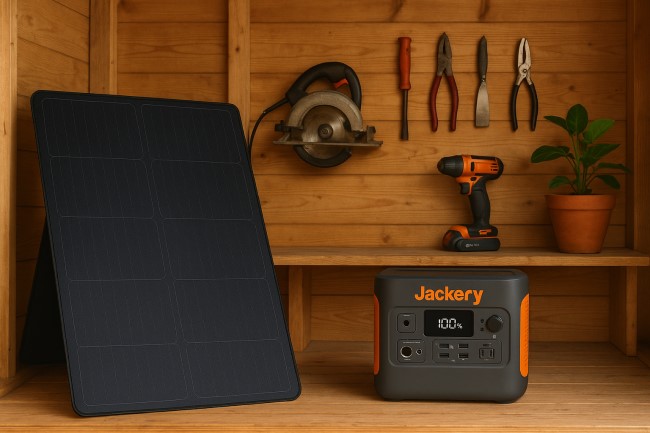
In the UK, a shed is more than a place for old paint tins and garden tools. For many, it’s a quiet refuge—a personal workshop where you can focus. Some turn it into a Man Cave lined with beloved tools; others create a plant-filled, art-ready She Shed.
Yet almost every project starts the same way: dragging a heavy, knotted, often bright-orange extension lead from the house. That cable shrinks your working radius, becomes a trip hazard across wet grass, and in a sudden shower you’re scrambling to unplug everything. Instead of pulling power farther across the garden, it makes more sense to bring power to the bench.
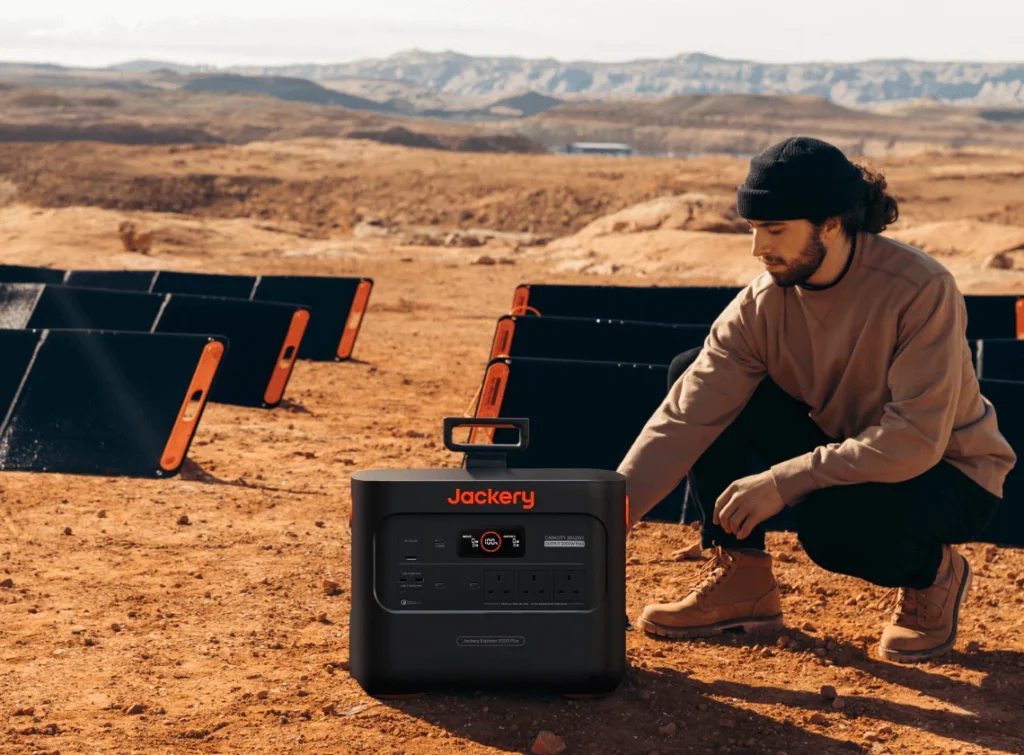
That’s where modern portable solar generators step in — giving every shed the chance to become a truly independent workshop.
Reliable Power for the Modern Shed Workshop
A reliable shed power setup needs to do three things well: deliver enough power, run quietly, and stay consistent. The Jackery Solar Generator 2000 Plus takes the “power station + solar panels” approach and turns it into a scalable, off-grid system you can unfold in a shed without mains, on an allotment, or even at a friend’s place.
Power and capacity
The 2000 Plus starts at about 2 kWh (2042.8 Wh) with a 3000 W rated output, and you can add up to five battery packs to take total capacity from 2 kWh to 12 kWh. That means you’re not limited to charging cordless packs and running lights—you can drive tools with high inrush current, including circular saws, mitre saws, angle grinders and some benchtop kit. As a rough scale, 2 kWh covers a day of lighter tasks or camping, 4 kWh supports hours of professional work, and 12 kWh stretches to a week of home backup. To make it tangible for shed jobs and outages:
Typical runtime guide (2 kWh starting capacity)
| Category | Device | Typical load | Indicative runtime |
| Workshop | Hand drill | 700 W | ~ 3.1 hours |
| Pruning saw | 900 W | ~ 2.5 hours | |
| Electric water pump | 60 W | ~ 20 hours | |
| Angle grinder | 800 W | ~ 4 hours | |
| Home backup | Fridge | 520 W | ~ 3.1 hours |
| Electric oven | 800 W | ~ 2.1 hours | |
| Electric blanket | 55 W | ~ 22 hours | |
| Ventilators | 28 W | ~ 35 hours |
These figures are manufacturer examples to help you plan. Real runtimes vary with intermittent tool use, materials and temperature.
Quiet, safer operation for a half-enclosed space.
As a quiet generator alternative, a battery system produces no exhaust fumes during use, so it’s far better suited to a half-enclosed shed than a petrol unit. Noise levels are low, which helps you keep concentration and keeps the peace with neighbours. Compared with a fuel generator—where you’d worry about ventilation, refuelling and maintenance—this behaves more like a tool: switch on, get to work.
Stable recharging and long-term reliability.
Whether you’re working through patchy light or a cloudy afternoon, the solar side matters. The 2000 Plus pairs with bifacial panels using dual-sided IBC tech, designed to perform under low light and partial shading. The panels are TÜV Class II (IEC TS 63163) certified, rated for 4,000 folds, and built with shock-resistant construction. At about 6.2 kg per panel—~15% lighter than typical alternatives—they’re easy to carry to the far end of the garden; setup is quick too (unfold in ~30 seconds, full system in under 1 minute).
Ways to Recharge:
| AC Adaptor | 2 hours |
| 12V Car Adaptor | 25 hours |
| 1 x SolarSaga 200W | 14 hours |
| 2 x SolarSaga 200W | 7 hours |
| 6 x SolarSaga 200W | 2 hours |
Under the lid, the battery is LiFePO₄, designed for longevity—around 10 years based on one cycle per day. A companion app (Wi-Fi / Bluetooth) lets you check power and state of charge so you can plan your workday.
Petrol generator vs Solar generator
In a shed or any semi-enclosed space, safety and experience come first. A petrol generator carries carbon monoxide risk and needs to be run outdoors with good ventilation; poor weather complicates everything. Noise and fumes also break the workshop atmosphere and can bother neighbours. A portable solar generator and battery system, by contrast, has no exhaust fumes during use, lower noise, and minimal routine maintenance.
On cost, solar can top up for free during the day, and you can charge at home on off-peak tariffs; fuel units incur ongoing petrol/diesel costs plus oil, plugs and other servicing.
On convenience, battery power is ready to go—no warm-up, no handling of flammables. Put simply: for UK sheds and back gardens, a battery system is the more practical long-term choice.
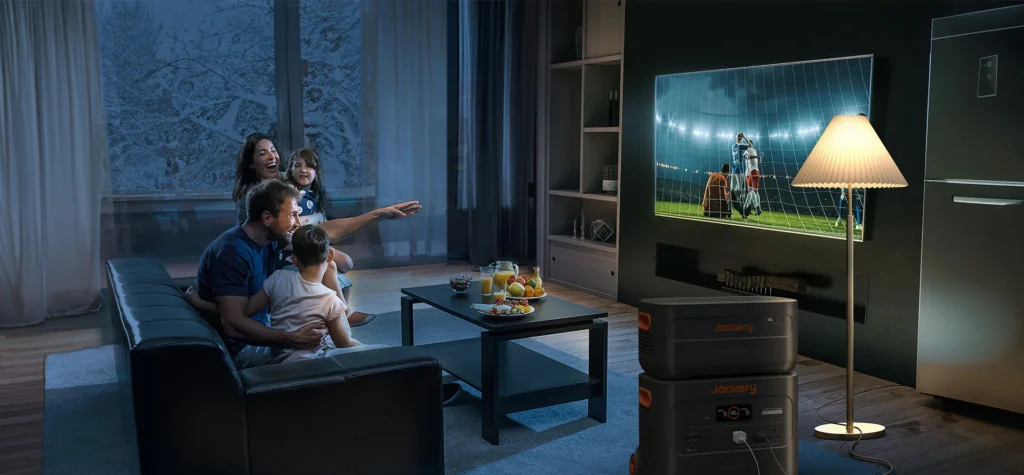
If you’re specifically shopping a generator for home backup that can also work in the shed, the 2000 Plus hits a useful middle ground: enough output for heavy tools, with capacity that can grow as projects do.
FAQs
- Are the solar panels weather-resistant?
The SolarSaga panels are TÜV Class II certified and built to withstand outdoor use. They handle light rain and cloud cover but should be stored indoors in heavy weather. - Does it need much maintenance?
Minimal—keep it dry/clean and top up charge periodically. - Do I need the app to use it?
No—the front panel works on its own; the app (Wi-Fi/Bluetooth) is for monitoring and control.
Conclusion
In the end, a shed is more than four walls and a roof — it’s where ideas take shape, where projects start quietly and grow into something real. Power should never be what holds that back.
Freeing your shed from the extension lead isn’t just about convenience; it’s about keeping the focus on what you actually enjoy making. With clean, quiet, reliable energy on hand, the work becomes simpler — and the space finally feels your own.
Curious about taking your shed off the mains? Learn more about the Jackery Solar Generator 2000 Plus here.