freddie burns england – The Untold Story of Talent, Timing, and Triumph
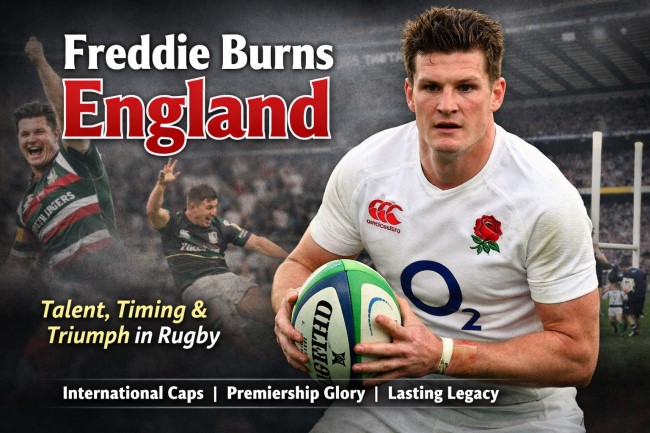
The story of Freddie Burns and England rugby is one of natural talent, fierce competition, and resilience. Few English fly-halves have shown such creativity and composure at club level, yet Burns’ international career remains one of the most debated topics in modern English rugby. This article explores freddie burns england in depth — from his rise as a prodigy to his England caps, club success, and lasting legacy in the game.
Early Life and Rugby Foundations
Freddie Burns was born on 5 May 1990 in Bath, England, into a rugby-loving family. His father, an amateur rugby player, played a major role in shaping his early interest in the sport.
Natural Talent from a Young Age
From school rugby to academy level, Burns stood out for:
-
Exceptional kicking accuracy
-
Calm decision-making under pressure
-
Advanced game management for his age
By his late teens, it was clear that Burns was destined for professional rugby, with fly-half being his natural position.
Rise Through the Premiership
Breakthrough at Gloucester Rugby (H3)
Burns made his professional breakthrough with Gloucester, quickly becoming one of the youngest starting fly-halves in the Premiership. His performances were mature beyond his years, earning praise from pundits and coaches alike.
Key strengths at club level (H4)
-
Tactical kicking from hand
-
Confidence in attack
-
Ability to control tempo
His form at Gloucester put him firmly on the England radar.
Freddie Burns England Career Explained
England Debut and International Caps (H3)
Freddie Burns made his England debut in 2012 during the Six Nations Championship. He went on to earn five England caps, featuring mainly off the bench.
While his opportunities were limited, Burns showed flashes of quality when called upon, demonstrating:
-
Composure in high-pressure Test environments
-
Reliable goal-kicking
-
Tactical awareness
Why His England Career Was Short (H3)
The freddie burns england debate often centers on timing rather than talent. Burns played during an era stacked with elite fly-halves, including:
-
Owen Farrell
-
George Ford
-
Danny Cipriani
With England prioritising defensive solidity and physicality at fly-half, Burns’ more creative style did not always align with selection preferences.
Club Success Beyond England
Leicester Tigers and Premiership Glory (H3)
Burns’ club career reached its pinnacle with Leicester Tigers. In the 2021 Premiership final, he famously kicked a last-minute drop goal to secure the title — one of the most iconic moments in modern English rugby.
Why this moment matters (H4)
-
Demonstrated elite mentality
-
Cemented his reputation as a clutch player
-
Defined his legacy more than England caps
Playing Abroad and Expanding His Game (H3)
Burns later embraced international club rugby, playing in:
-
Japan
-
Super Rugby
-
Eastern Europe
These experiences added depth to his game, exposing him to different styles and rugby cultures.
Style of Play and Strengths
What Made Freddie Burns Special (H3)
Freddie Burns was never the biggest fly-half, but his rugby intelligence set him apart.
Core attributes (H4)
-
Vision and creativity
-
Accurate goal-kicking
-
Calm leadership
He excelled in systems that valued attacking flair and tactical freedom.
Legacy in English Rugby
More Than Just an England Number (H3)
While his England career was brief, Burns’ influence on English rugby is undeniable. He inspired a generation of fly-halves by proving that:
-
Skill and intelligence can rival physicality
-
Mental toughness defines great moments
-
Club rugby achievements matter
The freddie burns england story serves as a reminder that international caps alone do not define greatness.
Life After Peak International Rugby
Burns transitioned smoothly into a senior leadership role during the later stages of his career, often mentoring younger players and contributing tactically beyond matchday performances.
Many observers believe his future lies in:
-
Coaching
-
Media analysis
-
Player development
Quick Info About Freddie Burns England
Freddie Burns – Quick Profile
-
Full Name: Freddie Burns
-
Date of Birth: 5 May 1990
-
Nationality: English
-
Position: Fly-half
-
England Caps: 5
-
Notable Achievement: Premiership-winning drop goal (2021)
FAQs About Freddie Burns England
Was Freddie Burns a regular England starter?
No. He earned five caps but was not a long-term starter due to intense competition for the fly-half role.
Why is Freddie Burns remembered despite limited England caps?
His club performances, leadership, and iconic moments — especially the Premiership final drop goal — cemented his reputation.
Did Freddie Burns underachieve at international level?
Not necessarily. Many analysts believe timing and selection strategy limited his England opportunities rather than a lack of ability.
Is Freddie Burns considered a successful rugby player?
Yes. Success is measured by impact, consistency, and legacy — all areas where Burns excelled.
What does the future hold for Freddie Burns?
He is widely expected to remain involved in rugby through coaching, mentoring, or analysis roles.
Conclusion
The freddie burns england story is one of exceptional talent navigating a fiercely competitive era. While his England career was brief, his impact on club rugby and English rugby culture remains significant. Freddie Burns proved that moments of brilliance, leadership under pressure, and love for the game can leave a lasting legacy — regardless of the number of international caps.